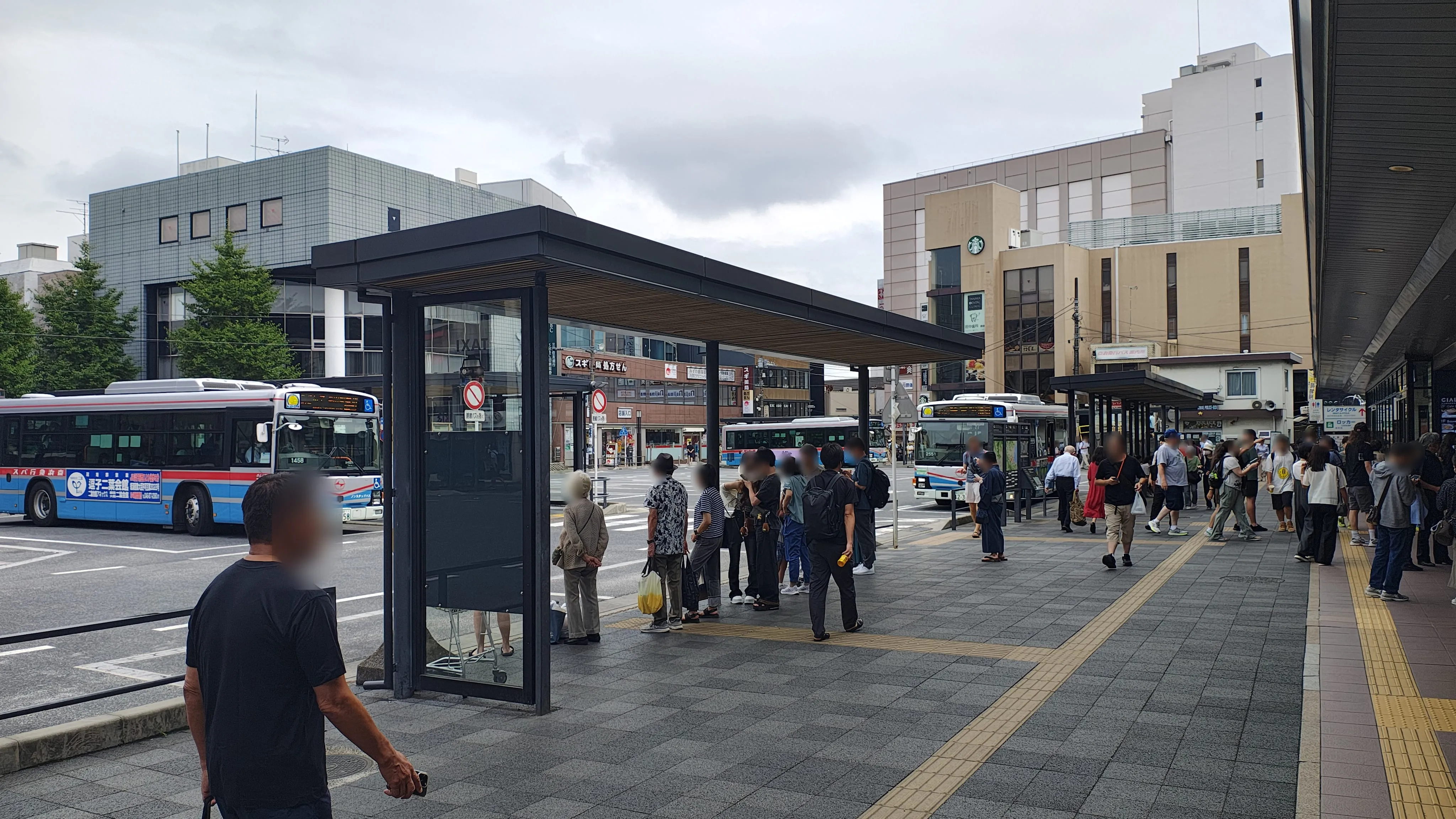
Come out of the east exit of Kamakura Station and the bus rotary is right in front of you. There are seven bus stops, numbered 1 to 7, and only the number is written large. To find out where each one goes, you have to walk over and read its board.
This article lists all seven, one by one. Destinations are copied the way the boards write them, in Japanese, so you can match the characters on the spot.
Find your stop by where you are going
| Where you are going | Bus stop |
|---|---|
| Great Buddha (Kotoku-in) · Hasedera | 1 or 6 |
| Tsurugaoka Hachimangu | 4 or 5 |
| Hokokuji (bamboo garden) · Jomyoji | 4 |
| Kamakuragu | 5 |
| Kenchoji | 2 |
| Komyoji · Kuhonji (Zaimokuza) | 7 |
The stop names on the boards are not the tourist names. Hasedera is written 長谷観音, the Great Buddha is 大仏前, Tsurugaoka Hachimangu is 八幡宮, Kamakuragu is 大塔宮, and the area around Hokokuji and Jomyoji is 浄明寺. Those are the characters to look for on the board.
How the rotary is laid out
With your back to the station, taxis take the left half and buses the right half. The stops sit along both sides of the island and in the middle, and the numbers do not run round in a circle. Looking for a destination works better than looking for a number.
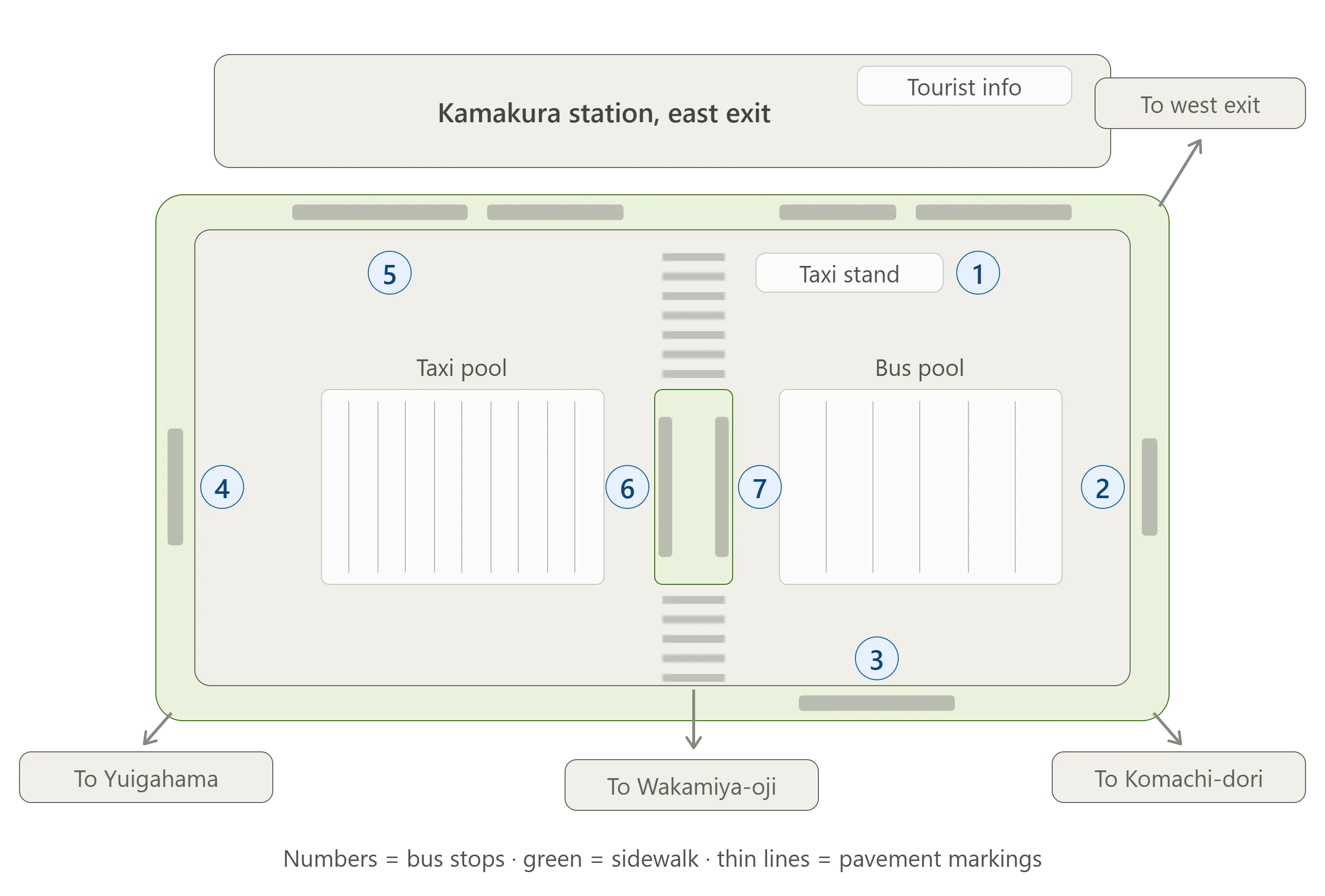
The tourist information office is on the station side, to your left as you come out, before you cross into the rotary.
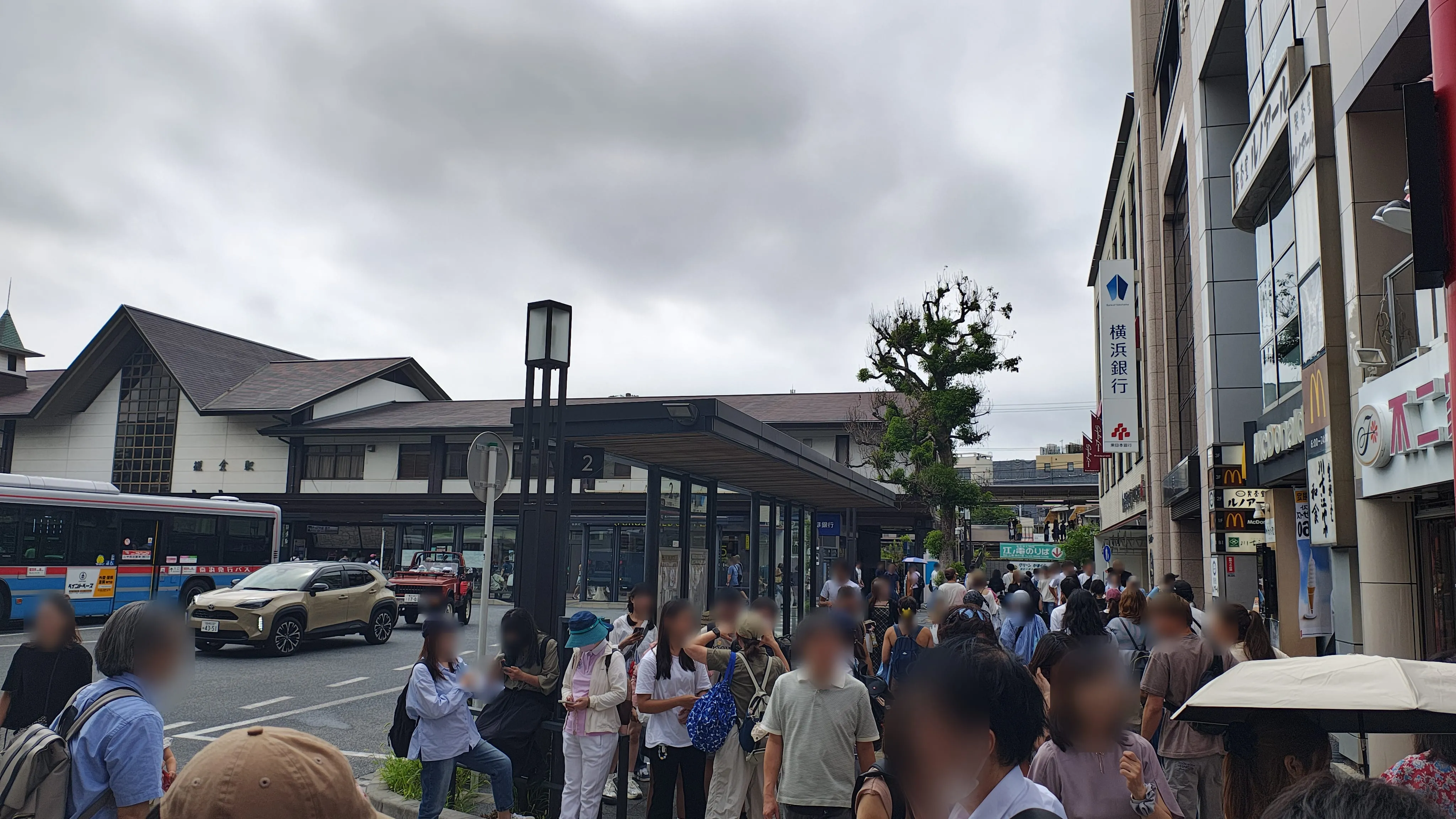
Stop 1 — via 長谷観音 and 大仏前, towards Fujisawa
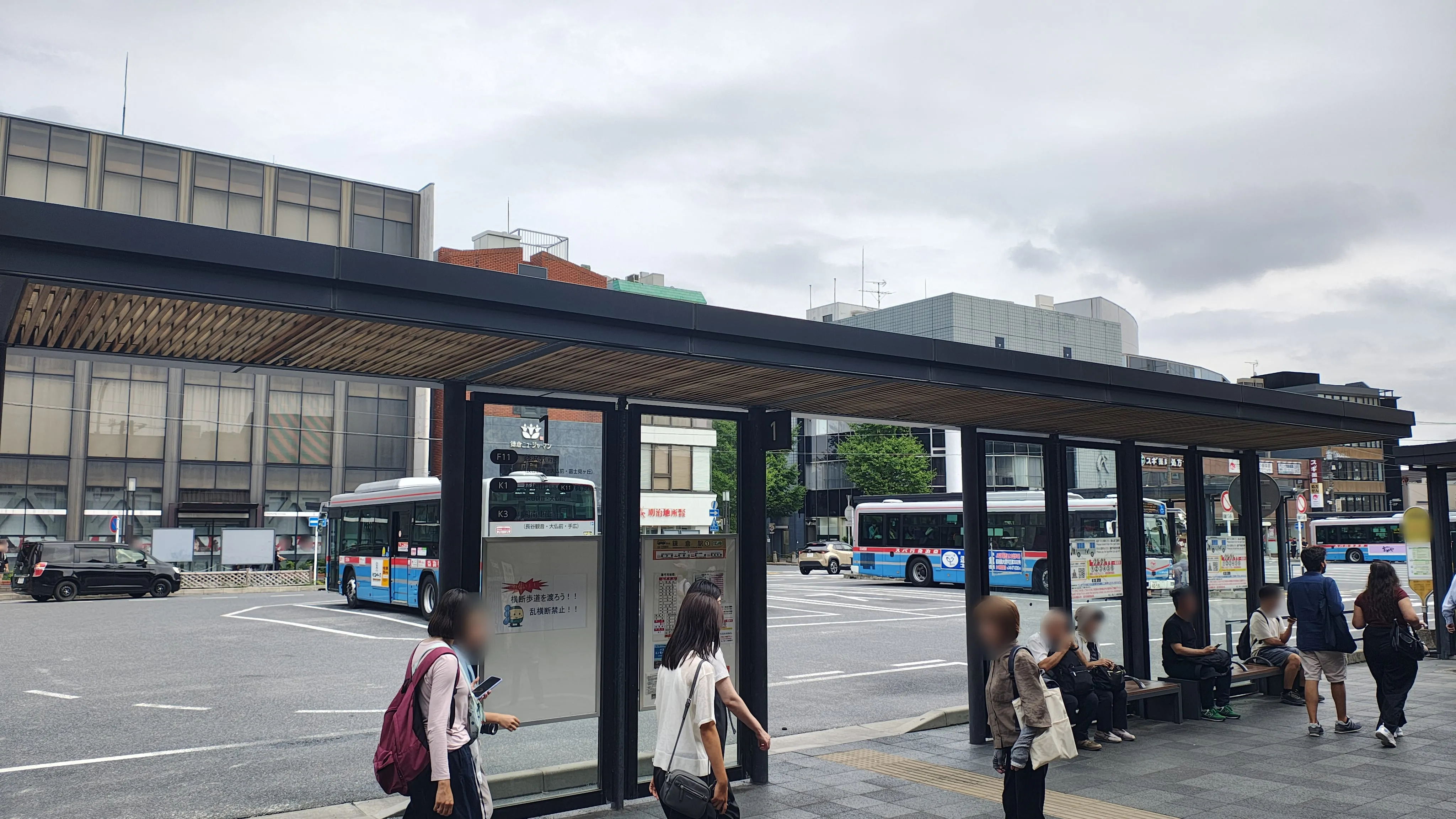
This is the stop for the Great Buddha and Hasedera. All three services call at 長谷観音 and 大仏前.
- F11 to 藤沢駅 (via 長谷観音, 大仏前, 富士見ヶ丘)
- K1 to 桔梗山 / K11 to 梶原 (via 長谷観音, 大仏前)
- K3 to 湘南車庫 (via 長谷観音, 大仏前, 手広)
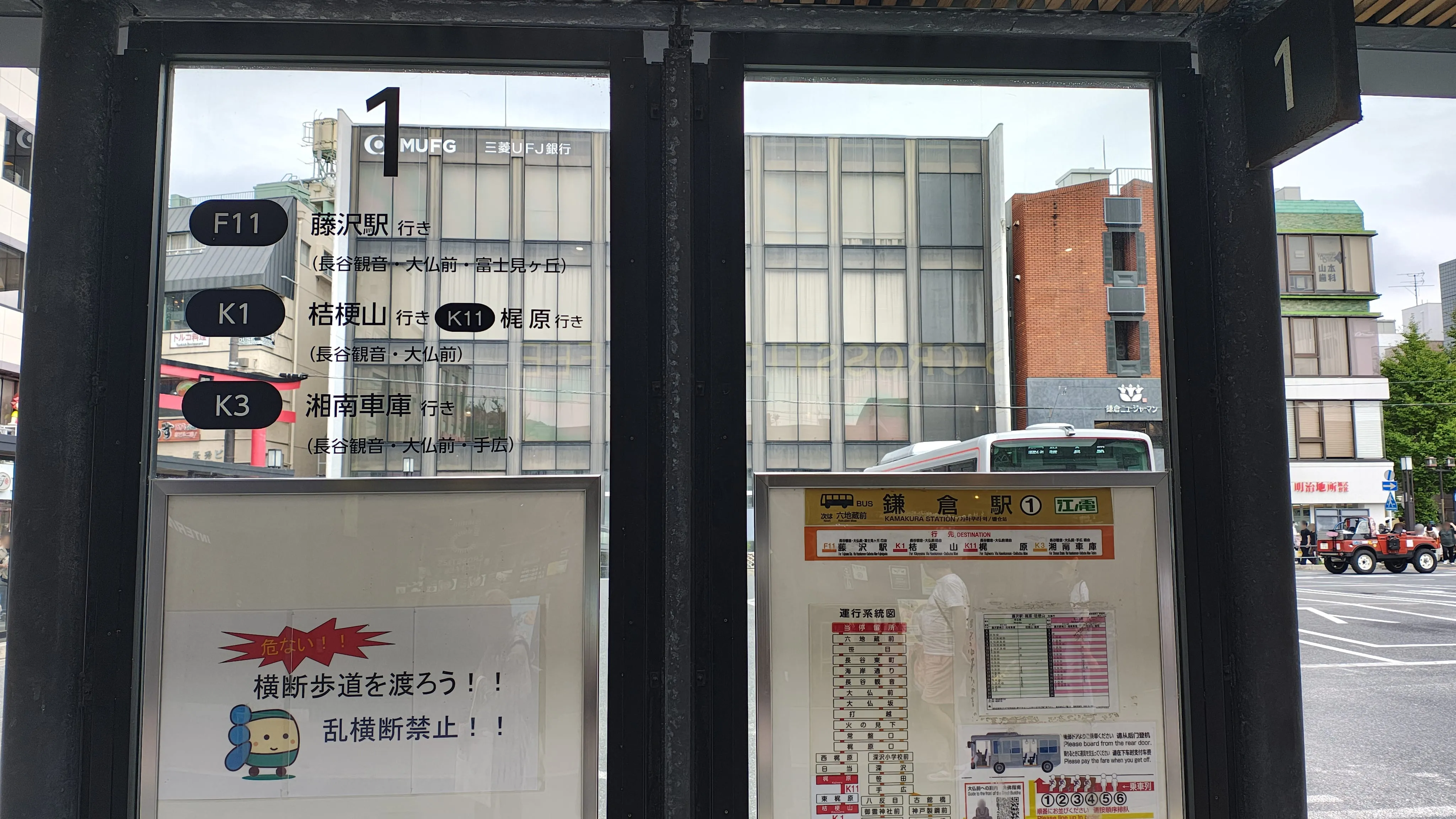
The final destinations differ, but as far as 長谷観音 and 大仏前 the route is the same. Take whichever comes first. Get off at 長谷観音 for Hasedera, at 大仏前 for the Great Buddha.
Stop 2 — via 建長寺, towards Ofuna and Kamiooka, plus highway buses
This is the stop for Kenchoji. The services heading north gather here.
- A21 to 上大岡駅 (via 建長寺, 常楽寺, 大船駅)
- N2 to 大船駅 (via 建長寺, 常楽寺)
- K4 to 本郷台駅 (via 建長寺, 勤労会館, 大船駅)
The same board also covers highway buses: 京都・大阪・堺 (Kyoto, Osaka and Sakai, operated by Nankai Bus and Wakayama Bus) and 羽田空港 (Haneda Airport).
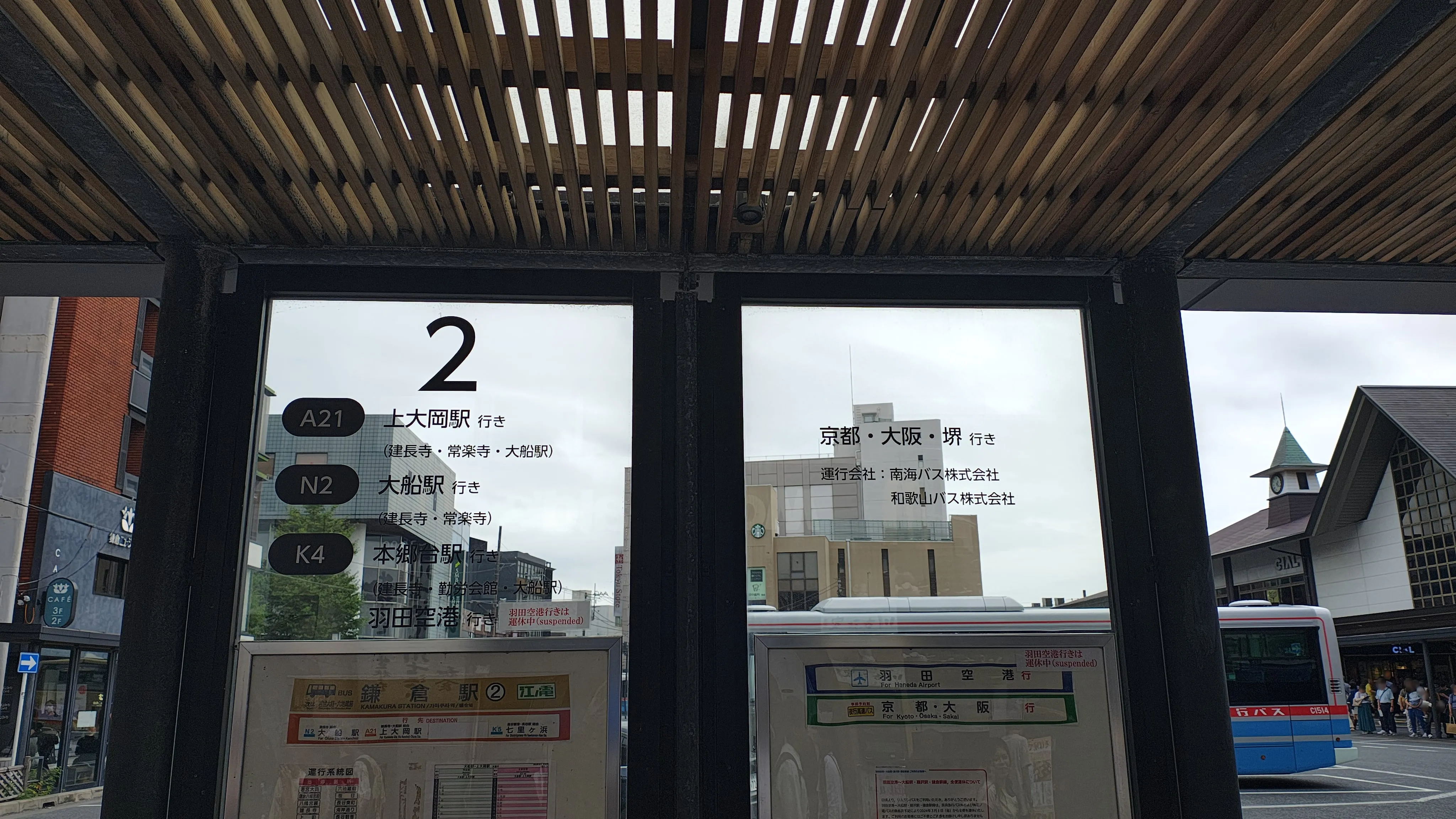
In the photo, the airport line carries a red notice reading “suspended”. That was on 30 August 2026; the airport service is running again. Treat it as a reminder of how often these notices change.
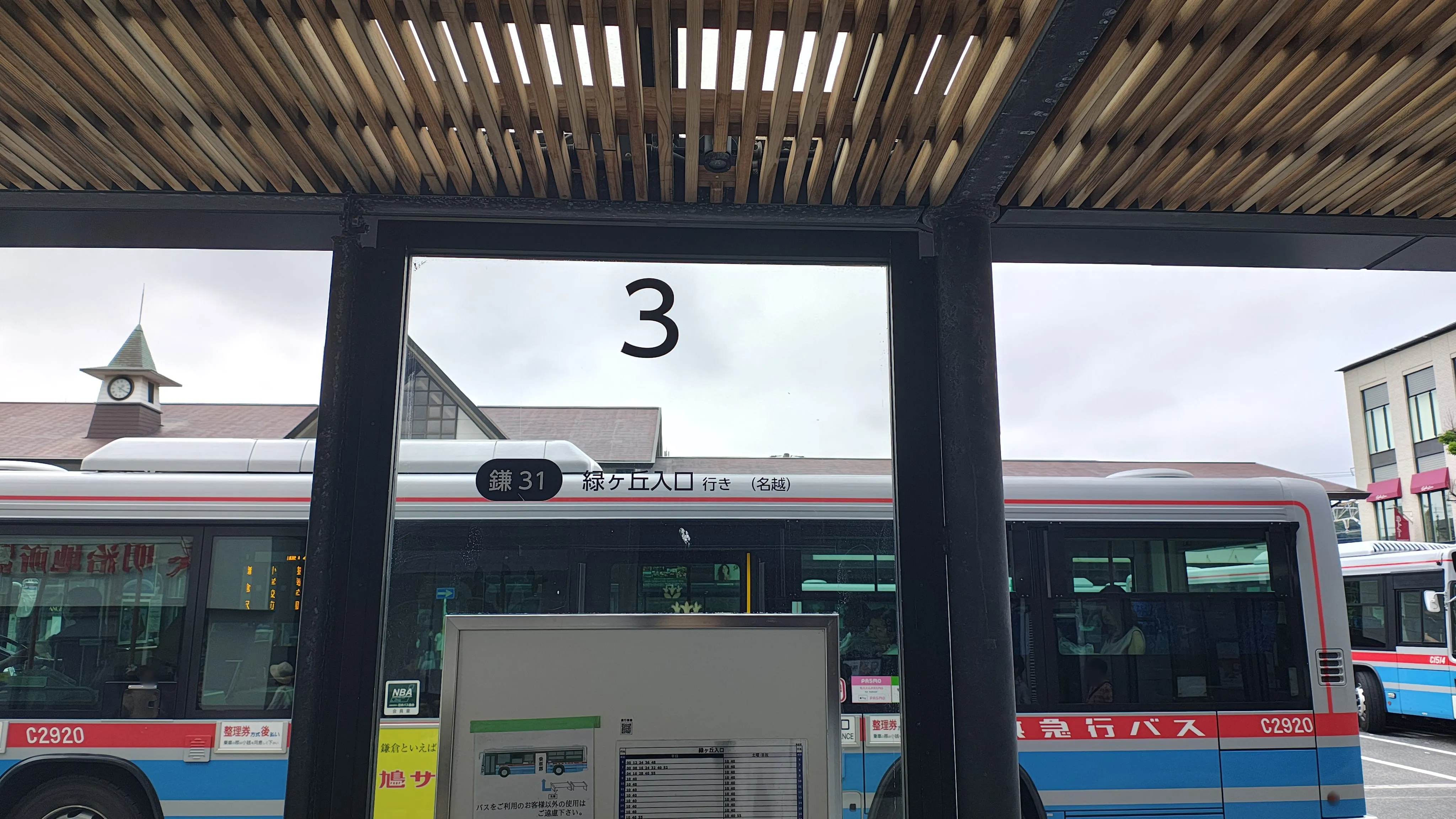
Stop 3 — via 名越, towards Midorigaoka-iriguchi
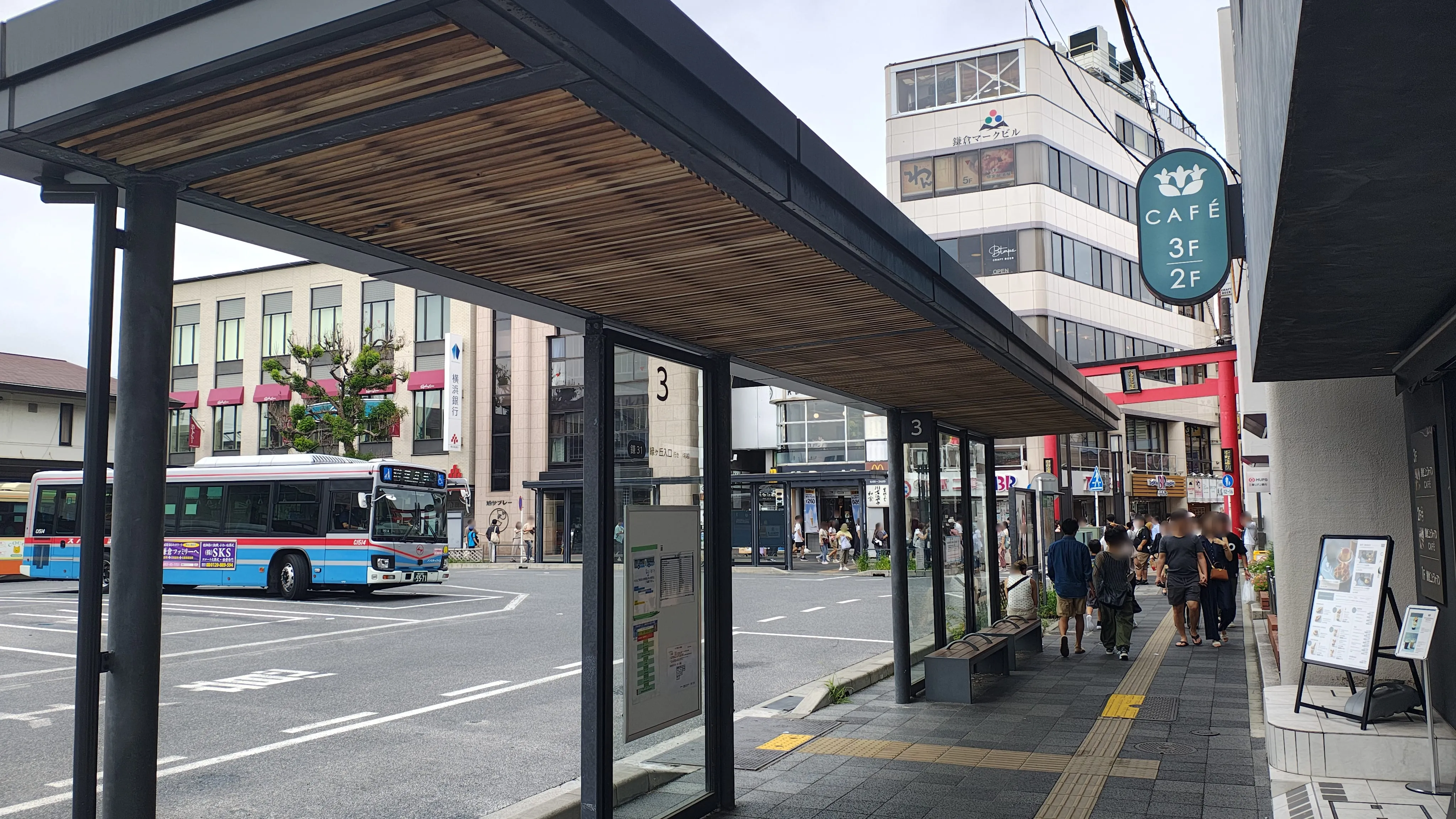
One service is listed on the board, and no major sightseeing stop is named on it.
- 鎌31 to 緑ケ丘入口 (via 名越)
Stop 4 — via 八幡宮 and 浄明寺, towards Kanazawa-hakkei
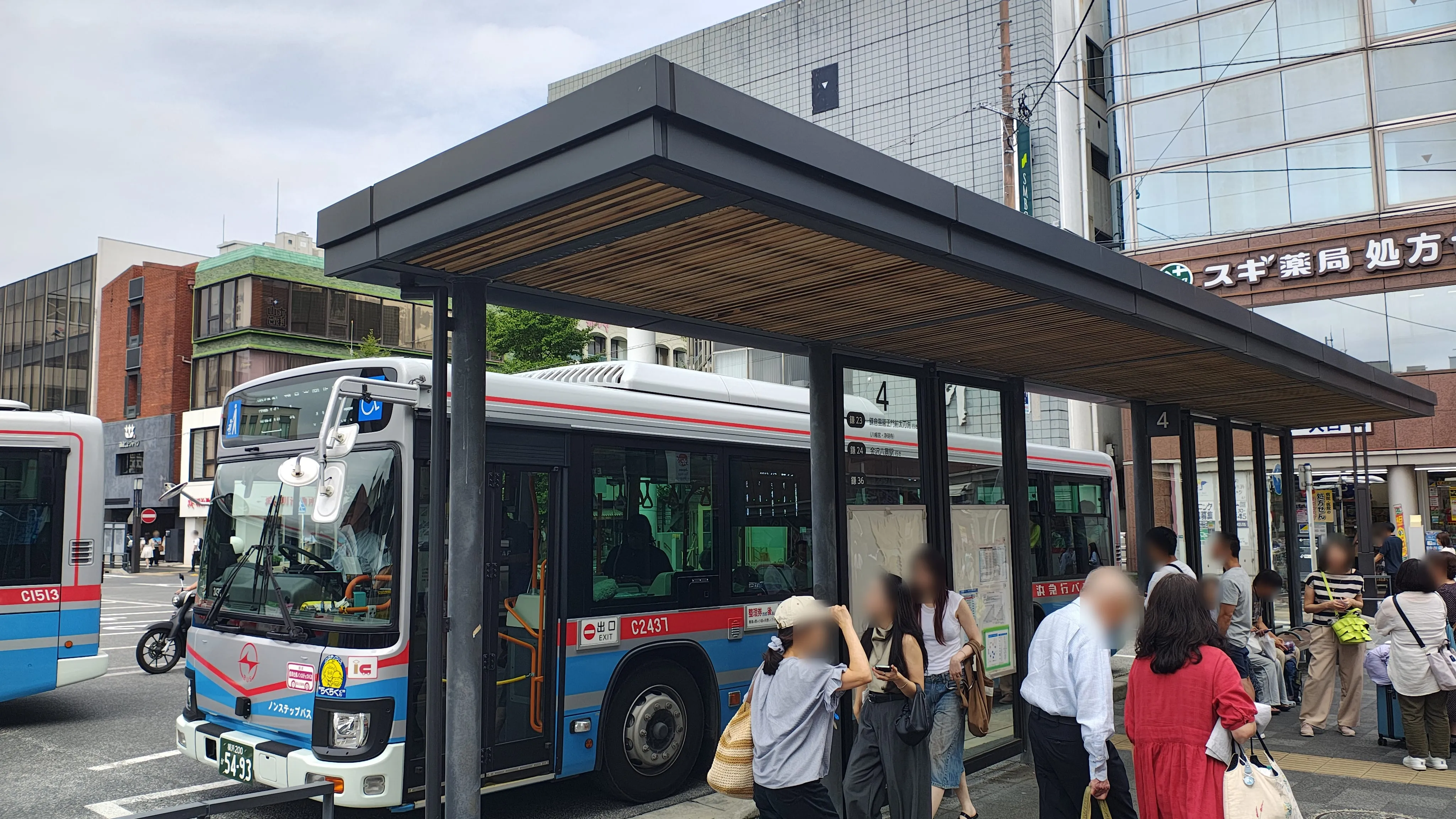
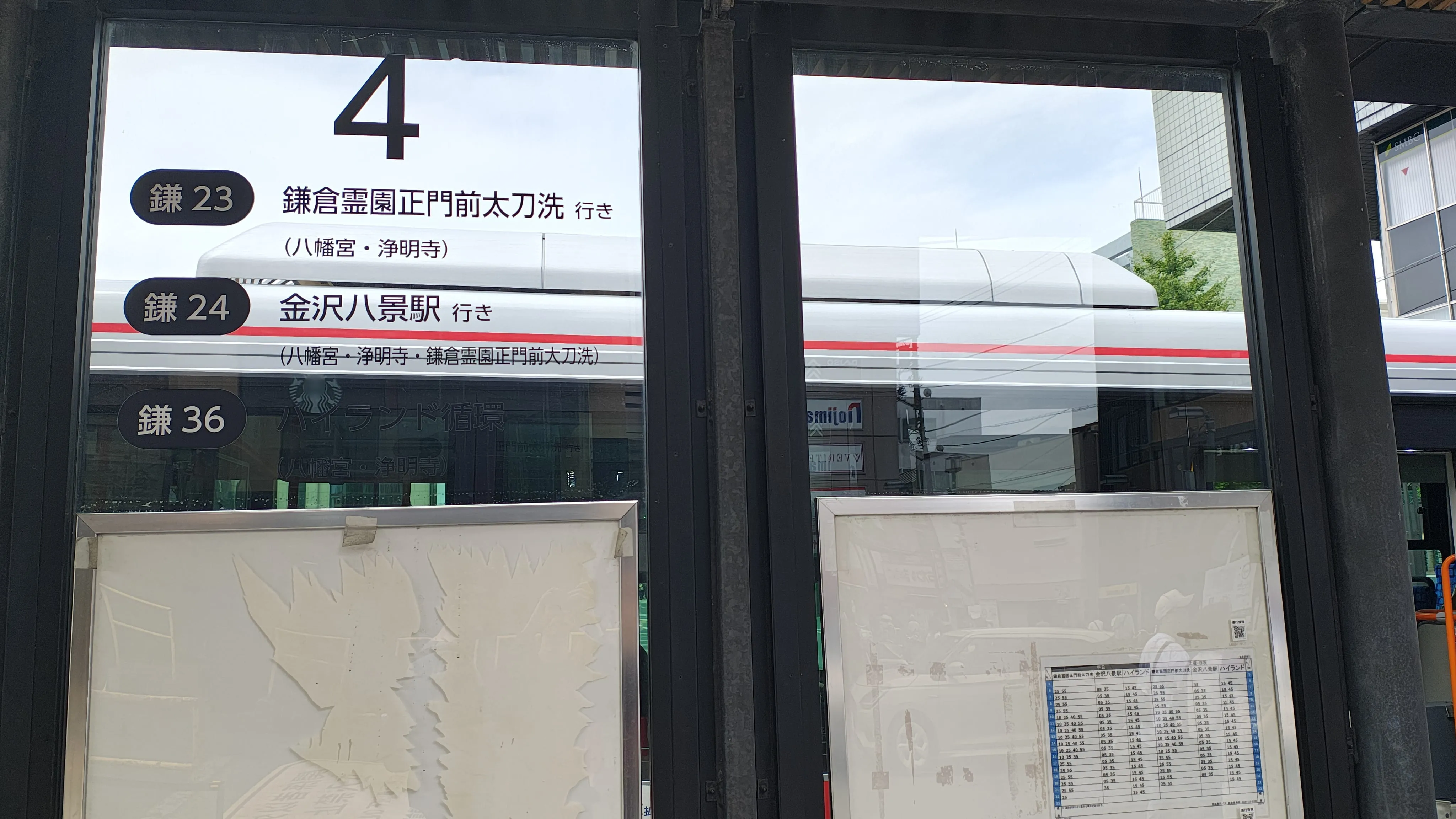
Buses for Tsurugaoka Hachimangu leave from here and from stop 5. Stop 4 carries the services that continue past the shrine to 浄明寺, the area around Hokokuji and Jomyoji.
- 鎌23 to 鎌倉霊園正門前太刀洗 (via 八幡宮, 浄明寺)
- 鎌24 to 金沢八景駅 (via 八幡宮, 浄明寺, 鎌倉霊園正門前太刀洗)
- 鎌36 ハイランド循環, a loop service (via 八幡宮, 浄明寺)
For Hokokuji and its bamboo garden, get off at 浄明寺. For the shrine alone you can also walk from the station, up Komachi-dori.
Stop 5 — via 八幡宮, towards Daitonomiya
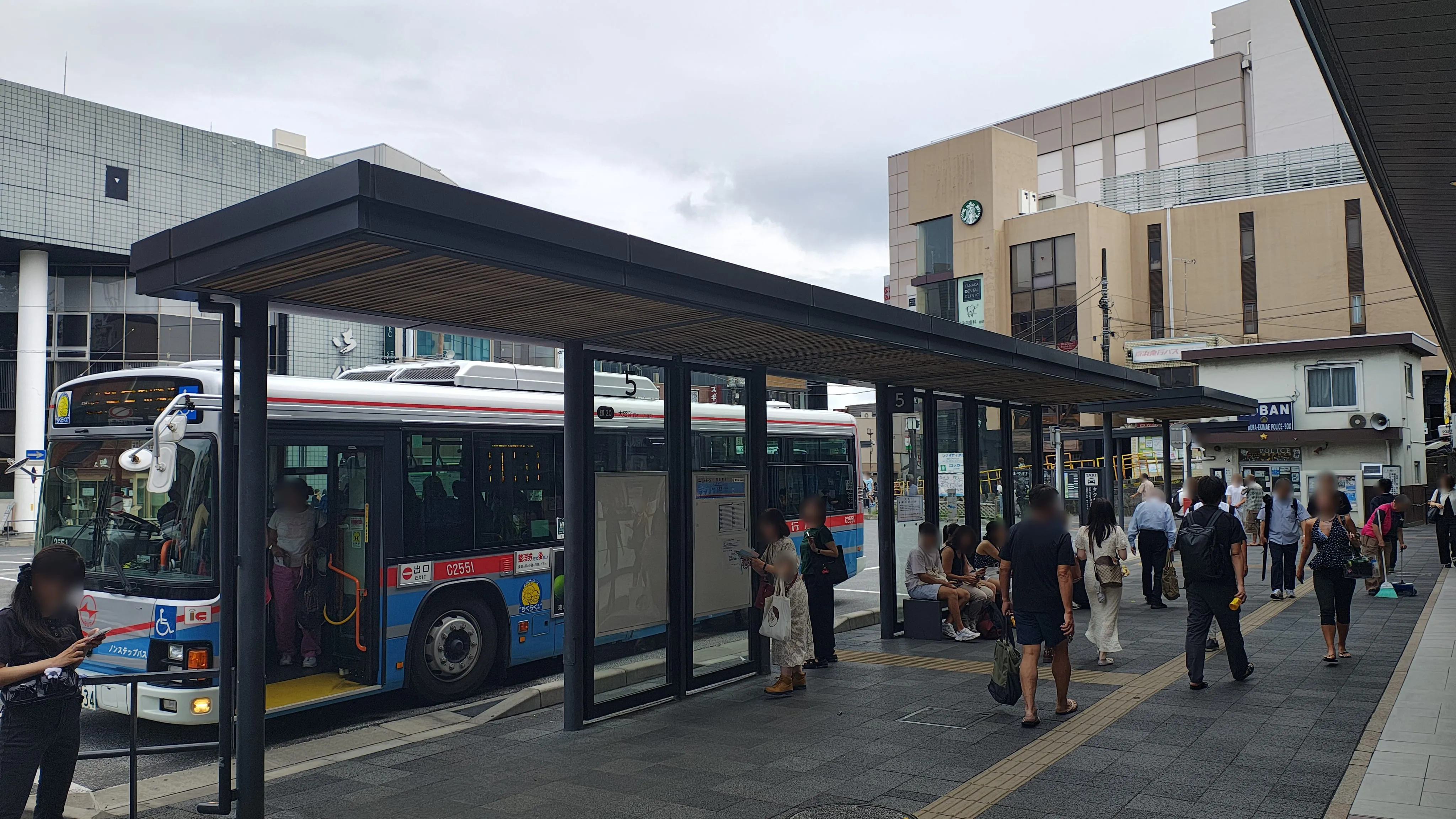
This one also calls at 八幡宮. Its terminus, 大塔宮, is the shrine known as Kamakuragu.
- 鎌20 to 大塔宮 (via 八幡宮)
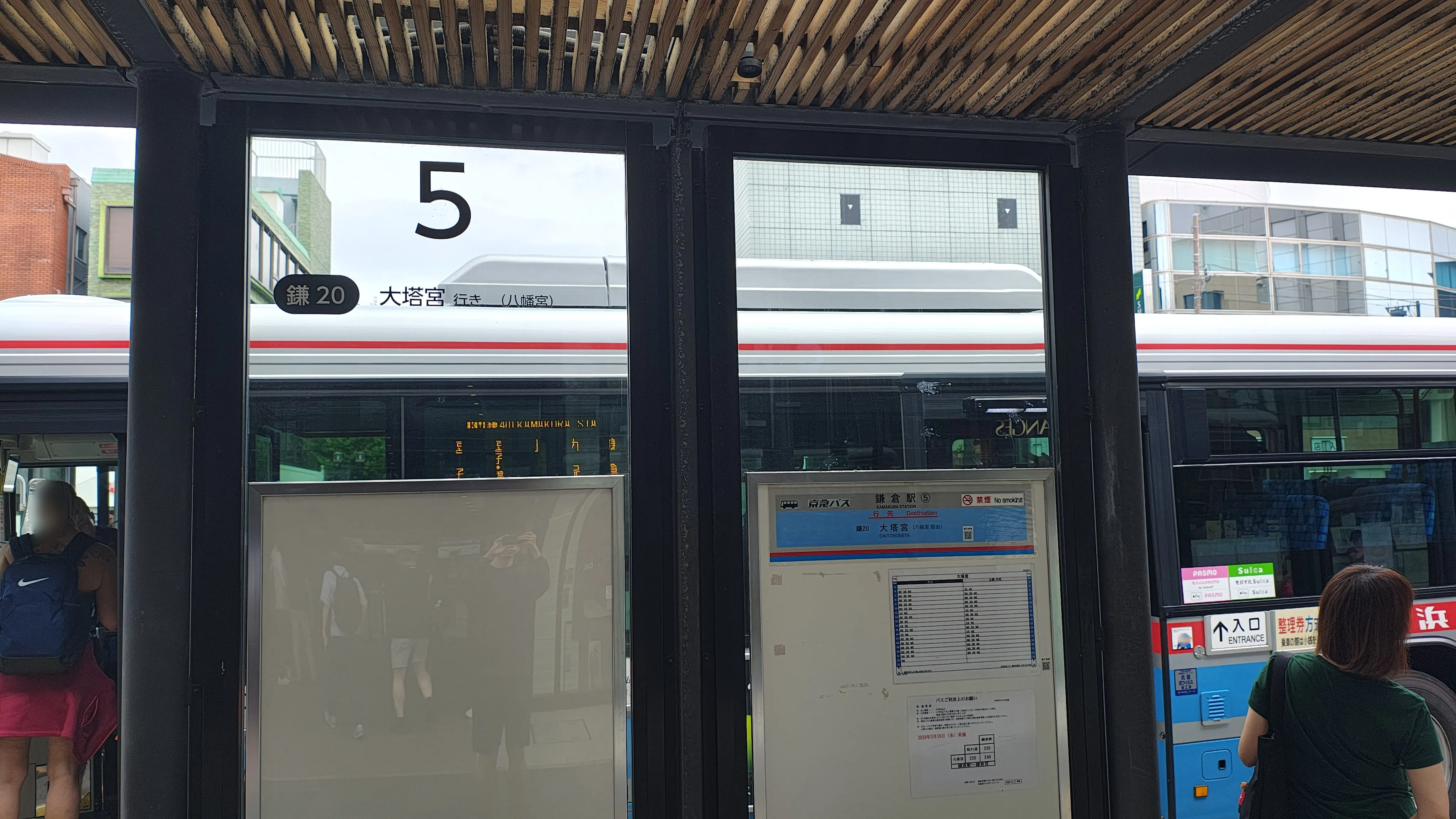
For the shrine itself, either stop 4 or stop 5 will do. Take whichever bus comes first.
Stop 6 — via 長谷観音 and 大仏前, towards Kamakurayama
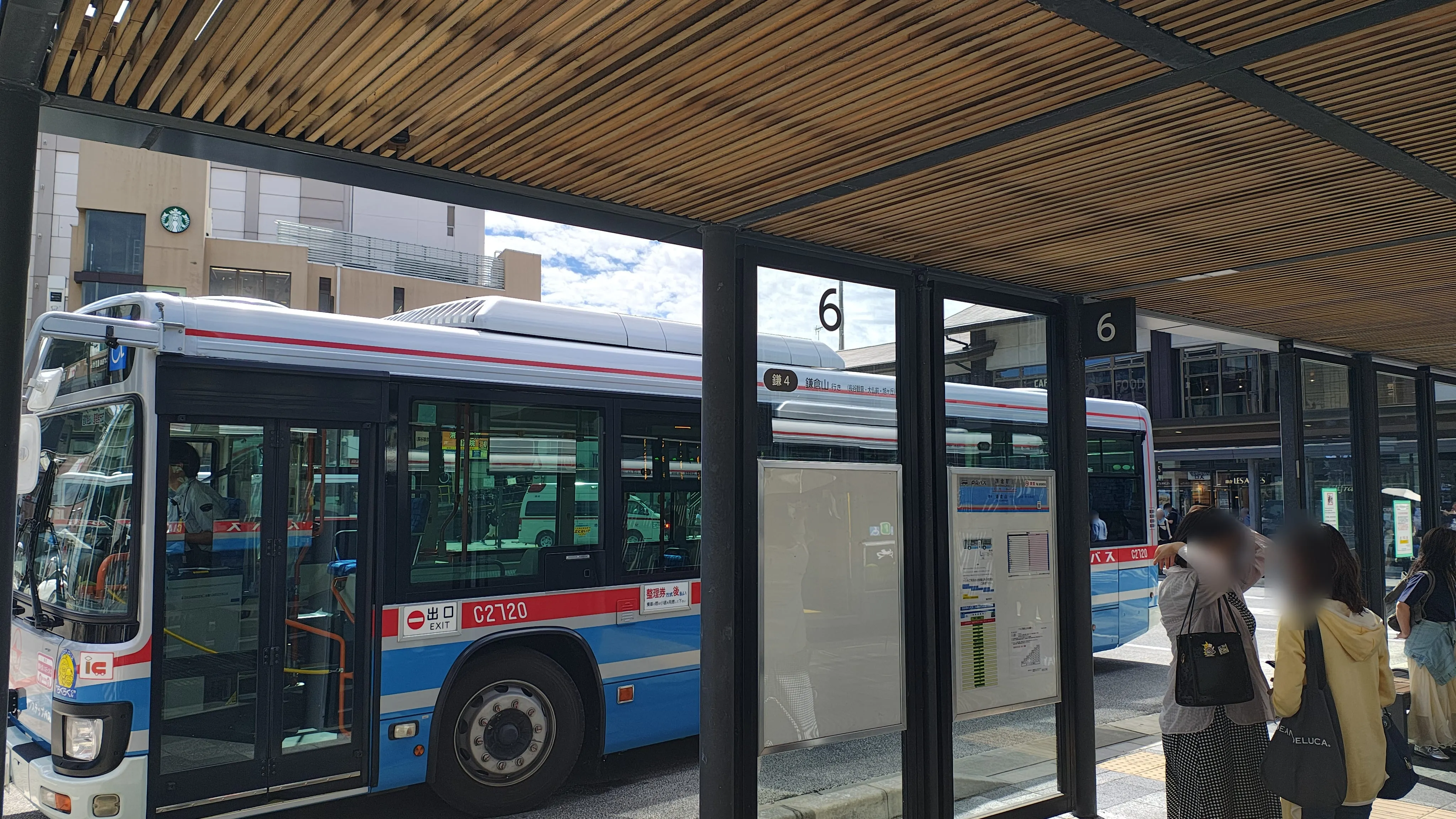
- 鎌4 to 鎌倉山 (via 長谷観音, 大仏前, 旭ヶ丘)
This is the other stop for the Great Buddha and Hasedera. If the queue at stop 1 is long, the 鎌倉山 bus from stop 6 calls at 長谷観音 and 大仏前 too. In the busy season, compare the two queues.
Stop 7 — via 九品寺 and 光明寺, towards Zaimokuza and Zushi
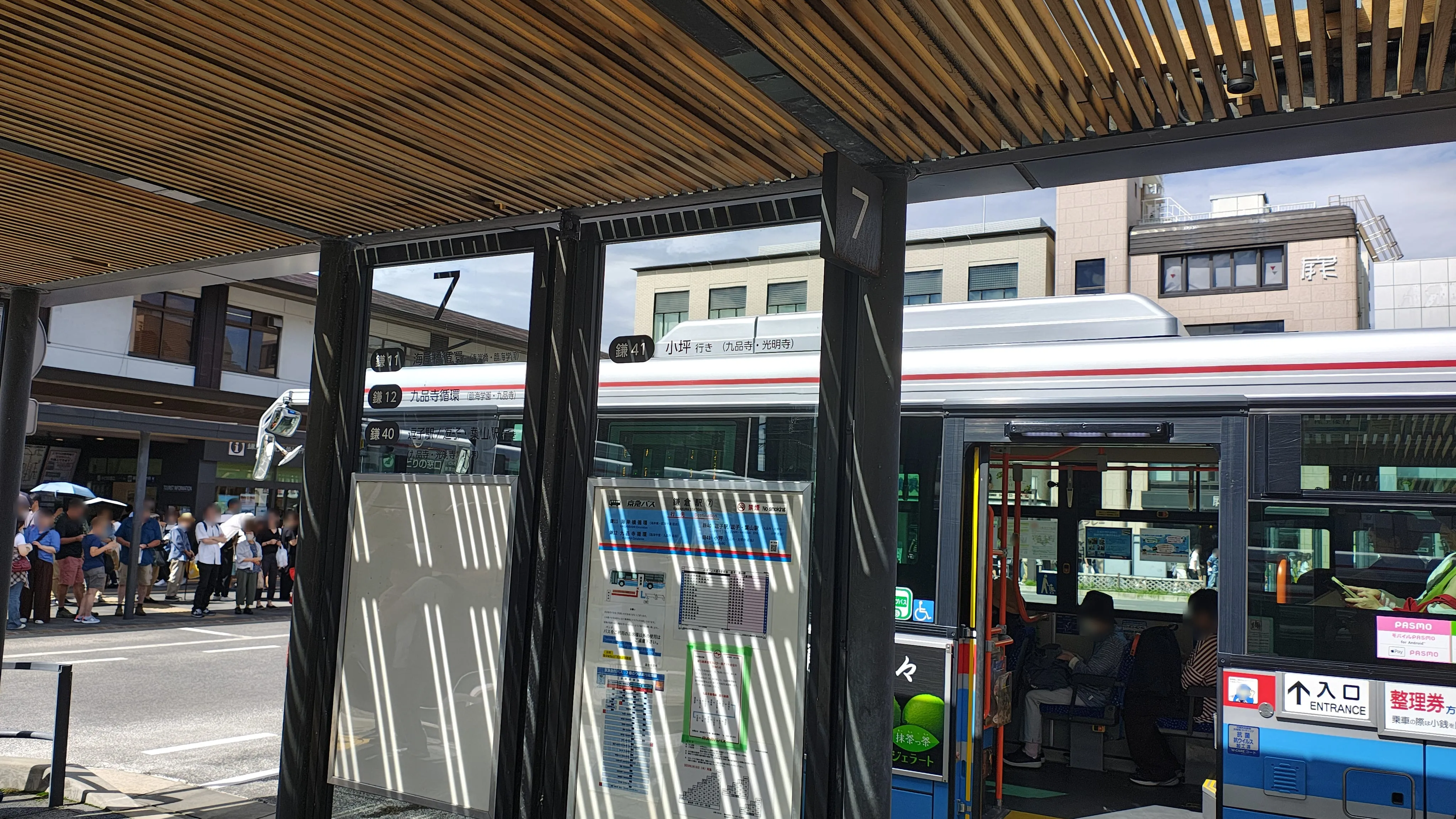
This is the stop for the coast at Zaimokuza. Komyoji and Kuhonji are this way.
- 鎌11 海岸橋循環 — KAIGANBASHI Circulation
- 鎌12 九品寺循環 — KUHONJI Circulation (via 臨海学園, 九品寺)
- 鎌40 to 逗子駅 / 逗子・葉山駅 — ZUSHI STA・ZUSHI-HAYAMA STA (via 九品寺, 光明寺, 小坪)
- 鎌41 to 小坪 — KOTSUBO (via 九品寺, 光明寺)
The English names above are the ones printed on this stop’s own timetable panel.
Tourist information is right outside the east exit
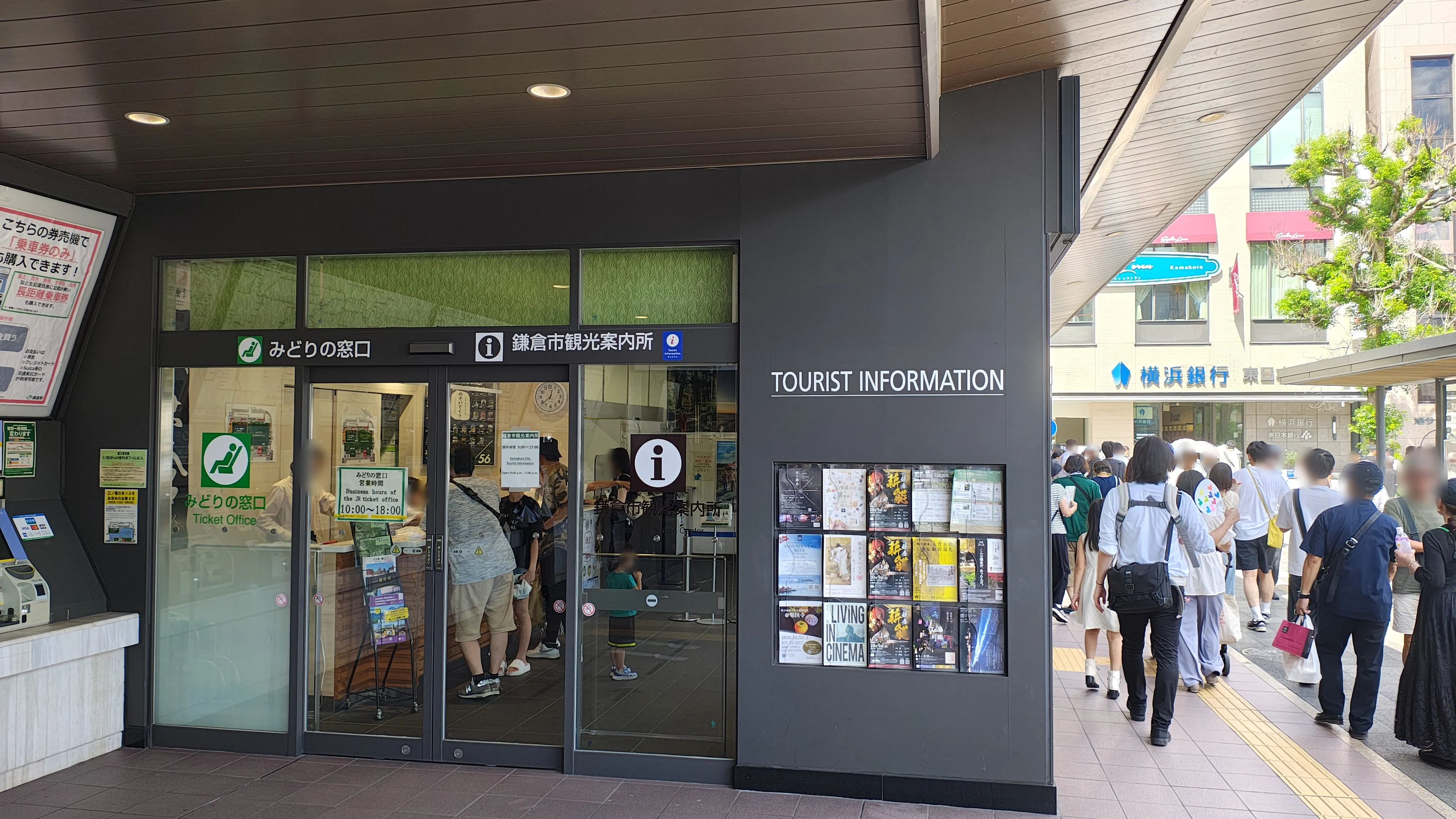
If you cannot work out the stop, this is the place to ask. It opens 9:00 a.m. to 5:00 p.m., as the notice in its window says.
Next door is the JR ticket office (みどりの窓口), open 10:00 to 18:00. They share one entrance, so you can do both errands in one stop.
The boards change
What is listed here is what the boards said when they were photographed, on 30 August and 22 September 2026. Services, the stops they are assigned to and the places they call at all change, and notices come and go — as the airport one did.
The part worth keeping is the habit: read the board at the stop itself. If in doubt, the tourist information office is a few steps from the exit.